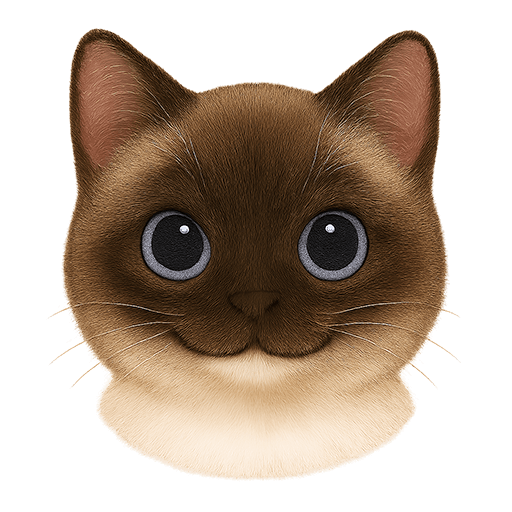

In January 2023, while Chinese communities and East Asian countries around the world celebrated the New Year of the Rabbit, something a little different was happening in Vietnam. The markets in Hanoi overflowed with cat dolls instead of rabbits.
Cats were drawn on New Year's cards. Astrologers read the fortunes of people born under the sign of the cat. On the calendars hung in every home for the traditional Vietnamese holiday of Tet, a cat sat in the exact spot where a rabbit would naturally be on any other country's calendar.
Interestingly, only one country uses a different animal. And the fact that this animal happens to be a cat will not seem like a coincidence to those who have read this series. What exactly happened to cats in Vietnam?
The Same Calendar, A Different Animal — Why This Difference Occurred
The East Asian 12 zodiac system is known to have originated in China: Rat, Ox, Tiger, Rabbit, Dragon, Snake, Horse, Goat, Monkey, Rooster, Dog, and Pig. This order and list of animals are virtually identical in China, Korea, Japan, and Taiwan. Regions heavily influenced by Chinese culture use the same system with almost no exceptions.
However, Vietnam is different. In the fourth position, where the rabbit sits in other countries, Vietnam places the cat (Meo). The other eleven animals are exactly the same. Just one, the rabbit, has been changed to a cat. Why? The answer to this question is not simple. There are several theories, and each tells a different story in an intriguing way.
The First Theory — Confusion Created by Pronunciation
The most widely known theory is a linguistic explanation. In ancient Chinese, the word for rabbit was mao. This is also the Chinese character representing the fourth position in the zodiac system, following the Rat, Ox, and Tiger.
However, as the pronunciation of this word was transmitted into Vietnamese, it is highly possible that it sounded similar to Meo, the Vietnamese word for cat. The explanation is that thousands of years ago, when this system spread from China to Vietnam, it was passed down orally. This caused phonetic confusion, allowing the cat to take that spot instead of the rabbit.
At first glance, it seems simple, but this theory is quite persuasive. When culture is transmitted through spoken language rather than written text, phonetic similarities changing original meanings is not uncommon in history. In particular, Chinese and Vietnamese share the commonality of being tonal languages, yet their vocabulary systems are quite different. It is entirely possible that confusion arose in that gap.
The Second Theory — The Cat Pushed the Rabbit Out
The second theory is much more dramatic. According to Vietnamese folklore, there is a story that while the rabbit originally won the spot in the zodiac race, something different happened in Vietnam.
The story of the zodiac selection as we know it goes like this: The Jade Emperor held a race to select twelve animals, with spots given in the order they arrived. The rat rode on the ox's back and jumped off just before the finish line to take first place, the ox took second, the tiger third, and the rabbit fourth.
But in the Vietnamese version, this story is told differently. It is said that during the race, the cat pushed the rabbit out of the way and took the fourth position. Another version claims that the rabbit made a mistake during the race and lost its spot to the cat.
What makes this story fascinating is that it holds more meaning than a simple animal swap. In Vietnamese culture, the cat was not just a simple animal. It was deeply recognized as a guardian of the home, a chaser of mice, and a protector of household wealth. The story of the cat beating the rabbit in the race is essentially a mythological expression of this cultural perception.
The Third Theory — There Were No Rabbits in Vietnam
The third theory asks the most practical yet fundamental question. Consider the agricultural environment of ancient Vietnam. In the plains of North China or the Mongolian steppes, rabbits were very common animals. In the regions where the zodiac was formed, the rabbit was a familiar sight.
But it was different in the rural areas of tropical Vietnam. It wasn't that there were no rabbits at all, but they were not as common and familiar as they were in northern China. On the other hand, there were cats in every Vietnamese village and every farmhouse. The cat guarding the rice granary was a core element of Vietnamese agricultural life.
According to this theory, when the zodiac system introduced from China was adopted in Vietnam, the Vietnamese naturally replaced the rabbit with the cat—an animal that was much more familiar and practically important to them. This interprets the change as a natural modification during the process of cultural reception to fit the local environment and customs, with the result continuing to this day.
Vietnamese People Living in the Year of the Cat
Regardless of which theory is correct, the Year of the Cat holds a unique cultural significance in Vietnam. In Vietnamese astrology, people born in the Year of the Cat are believed to have a specific personality and destiny. Generally, people with the cat sign are described as elegant, intuitive, cautious, clever, and highly artistic. At the same time, they are said to be somewhat introverted, seek stability, and tend to avoid conflict.
Interestingly, this description closely resembles the actual personality of a cat: independent yet warm, cautious yet clever, and insistent on their own ways. The belief that the traits of the zodiac animals project onto the personalities of those born in that year combines with the image of the cat to take on a unique form in Vietnam.
The Year of the Cat returns once every 12 years. The most recent Year of the Cat was 2023, and the next one is 2035. During this year in Vietnam, markets are filled with cat-related merchandise and images, and there is an increased interest in people born under the cat sign.
The Cat's Position in Vietnamese Culture
Setting the zodiac issue aside, there is a need to look more broadly at the position the cat occupies in Vietnamese culture. The Vietnamese word for cat, Meo, goes beyond a simple animal name and is used in various cultural expressions. The expression Meo khoc chuot, which translates to a cat crying for a mouse, is a Vietnamese proverb representing hypocrisy. It refers to someone who outwardly expresses sorrow but actually feels nothing of the sort.
Cats are a frequent subject in traditional Vietnamese folk paintings and woodblock prints. In the Dong Ho folk painting tradition in particular, cat paintings hold a very important place. Among these traditional woodblock prints, there are works featuring cats and mice together, where the relationship between the two was sometimes used as a tool for social satire. The dynamic between the strong and the weak, the ruler and the ruled, was expressed perfectly through the cat and the mouse.
In Vietnam's agricultural culture, the practical value of the cat was absolute. In a country where rice is a staple food, a cat guarding the rice granary from mice was a being that directly protected the family's food supply. This is exactly why in Vietnamese culture, the cat is recognized not merely as a pet, but as a guardian protecting the home and family.
The Only Choice in East Asia — The Question Vietnam Asks the World
When thought of in a larger context, Vietnam's zodiac cat holds fascinating implications. The cultural influence of China spanned across East Asia over thousands of years, and the zodiac is one of the most widely spread cultural elements of that influence. Numerous countries like Korea, Japan, Mongolia, Thailand, and Tibet accepted the Chinese zodiac system almost exactly as it is. However, Vietnam alone changed one element of that system to make it their own.
This serves as an interesting case study on the method of cultural reception: accepting a foreign culture but modifying it to fit one's own environment and values. It is a modification that occurred because cats were more deeply and practically connected to the lives of Vietnamese people than rabbits ever were.
In a way, Vietnam's zodiac cat reveals a truth that runs through this entire series. Cats have never remained just simple animals in any culture. In Egypt, they became gods; in Japan, they became yokai; in Islamic culture, they became symbols of cleanliness; and in Vietnam, they became animals of the calendar. Cats have been a screen upon which humans project what is most important to them.
Waiting for the Year of the Cat in 2035
In 2035, the Year of the Cat will return to Vietnam. At that time, the markets in Hanoi will once again overflow with cat dolls. Cats will be drawn on New Year's cards. People born in the Year of the Cat, welcoming their year that returns after a 12-year cycle, will anticipate a slightly more special year.
And while other countries around the world are sending off the Year of the Rabbit, Vietnam alone will spend the Year of the Cat. Thousands of years ago, someone changed a single animal on the calendar—perhaps due to phonetic confusion, perhaps because they loved cats more, or perhaps because they firmly believed cats suited their lives better than rabbits.
That small choice has carried on for thousands of years to become today's Vietnamese Year of the Cat. We have followed the story of cats occupying special places at various moments in human history throughout this series, but in Vietnam, the cat has claimed time itself on the calendar.
A country where, once every 12 years, an entire year belongs to the cat. There is exactly one such country in the world. That is Vietnam.