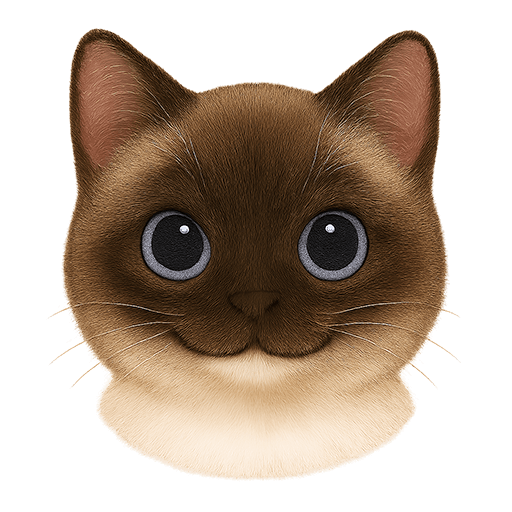

The Cheshire Cat has a specific order in which it disappears. First, the tail vanishes. Then the body. Then the legs. The face disappears, and the ears vanish. Finally, the eyes disappear. But the smile remains. Without a body, without a face, and without eyes, only a smile floats in the air in the darkness. Alice shakes her head.
"I've often seen a cat without a grin, but a grin without a cat! It's the most curious thing I ever saw in my life!"
The Cheshire Cat appeared this way in Alice's Adventures in Wonderland, written by Lewis Carroll in 1865. And now, 160 years later, this cat is still disappearing. And the smile still remains. Why does this cat smile? And why do we still try to understand that smile?
The Oxford Math Professor and the Little Girl — The Moment of Creation
To understand the Cheshire Cat, you first need to understand its creator. Lewis Carroll, the author of Alice's Adventures in Wonderland, is a pen name. His real name was Charles Lutwidge Dodgson. Simply Charles Dodgson, he was a mathematics lecturer at Christ Church College, Oxford. He taught logic and mathematics, took photographs, and enjoyed creating math puzzles.
He also had a family he was close to: the three daughters of Henry Liddell, the Dean of Christ Church. On July 4, 1862, Charles Dodgson went on a boating picnic up the River Thames with Henry Liddell's three daughters. On that river, he began to improvise a story. It was a tale featuring Alice Liddell, the middle of the three daughters, as the main character.
Alice was ten years old at the time. She begged him to write the story down so she could continue reading it. Dodgson initially gifted her a handwritten manuscript and later published it officially under the pen name Lewis Carroll. That book was Alice's Adventures in Wonderland. And within it was the Cheshire Cat.
The First Riddle of the Cheshire Cat — Why Cheshire?
The expression "grinning like a Cheshire cat" was an idiom used in England even before Carroll popularized it. But why Cheshire?
Cheshire is a county in northwest England. It is also where Lewis Carroll, or Charles Dodgson, was born. He was born in 1832 in a small village in Cheshire called Daresbury. He spent his childhood in Cheshire.
Then why did the image of the Cheshire Cat always smiling come to be? There are several theories about this.
First Theory - Cheese: Cheshire is a region famous for Cheshire cheese. There is a story that this cheese was once shaped and sold in the form of a smiling cat's face. Because the cheese cat always had a smiling face, the expression "grinning like a Cheshire cat" came to be. This theory is charming, but there is no solid historical evidence.
Second Theory - The Lion Coat of Arms: Inns and pubs in Cheshire used a lion coat of arms. When this lion was painted on signs, it was drawn so clumsily that it looked like a grinning cat.
Third Theory - Local Cats: There is also hard-to-verify folklore that cats in the Cheshire region were known for putting on particularly contented expressions.
We cannot know which theory is correct. What is certain, however, is that the expression "grinning like a Cheshire cat" existed before Carroll, and he brought it to life in literature by connecting it to his childhood hometown. Carroll transformed the expression from a simple idiom into a character with philosophical meaning.
The Cheshire Cat in the Novel — What Does the Cat Say?
In Alice's Adventures in Wonderland, the Cheshire Cat first appears at the Duchess's house. After that, it appears and disappears before Alice several times. The Cheshire Cat differs from the many strange beings Alice encounters in Wonderland. Most of the characters confuse, ignore, or act hostile toward Alice. However, the Cheshire Cat speaks to her seriously, provides information, and guides her. Their most famous conversation goes like this:
Alice: "Would you tell me, please, which way I ought to go from here?"
Cheshire Cat: "That depends a good deal on where you want to get to."
Alice: "I don't much care where."
Cheshire Cat: "Then it doesn't matter which way you go."
The logic contained in this brief conversation is flawless. If you have no destination, direction holds no meaning. This is quite fitting for a cat created by Dodgson, the mathematician. It is a conversation that is logically perfect, yet somehow feels empty. The Cheshire Cat also says this: "We're all mad here. I'm mad. You're mad." When Alice asks how he knows she is mad, the cat replies:
"You must be, or you wouldn't have come here."
Why Does the Cat Smile? — Three Interpretations
The Cheshire Cat's smile is one of the images most frequently analyzed by literary researchers. There are three main directions of interpretation.
First Interpretation - Satire and Irony: A perspective that views it as a satire on Victorian British society. In the upper-class society of that era, everything was filled with rules and formalities. Regardless of what people thought on the inside, they had to act dignified and polite on the outside. Their outward appearance and inner thoughts were different. The Cheshire Cat's smile is a symbol of this duality. Leaving only a smile when the body disappears is interpreted as a criticism of the hypocrisy of Victorian society, where the shell vanishes, but the outward expression remains.
Second Interpretation - Nihilism and Philosophy: There is also a perspective that reads the Cheshire Cat's smile existentially. The fact that only a smile remains after everything else disappears means that even if the world loses its meaning, a certain attitude can remain. In this interpretation, the Cheshire Cat is a kind of Stoic philosopher. In the face of the world's absurdity, chaos, and confusion, it does not panic or despair, but simply smiles. The smile becomes a form of resistance.
Third Interpretation - A Mathematician's Joke: From the perspective of Dodgson, a mathematician and logician, this might be a joke about mathematical abstraction. In mathematics, you can leave only abstract concepts without concrete objects. Extracting only the abstract concept of a smile from the concrete existence of a cat is a humorous version of the mathematical abstraction process. A smile without a cat. A concept without a formula. Perhaps they are the same thing.
Tenniel's Illustrations — The Birth of a Visual Image
Lewis Carroll was not the only one who shaped the Cheshire Cat into the image we know today. The contribution of John Tenniel, who drew the original illustrations, is absolute. Tenniel was the chief illustrator for Punch, the most famous satirical magazine in Britain at the time. Carroll commissioned him for the illustrations, and Tenniel accepted with almost no hesitation.
The Cheshire Cat drawn by Tenniel is a tabby cat. It does not look threatening or scary. Rather, it looks comfortable and even a bit plump. However, its smile is strange. It is too large. It lingers too long. It looks somewhat like a human smile.
In Tenniel's illustration, the Cheshire Cat sits on a tree branch like the representative image of this story. Slanted, comfortable, as if looking down on everything. Its position is symbolic. The cat looks from above. Alice must look up. The positional relationship of knowledge and authority is visually expressed. Tenniel's image has since been reinterpreted into hundreds of versions. But there is one thing that remains unchanged in all those versions. The smile.
Carroll and Dodgson — The Author Himself Disappeared
What is interesting is that the figure of Lewis Carroll himself resembles the Cheshire Cat in a way. Charles Dodgson hated using the name Lewis Carroll in official settings. He even refused to reveal to people that he was Lewis Carroll. He strictly separated his two identities.
Mathematics lecturer Charles Dodgson and fairy tale author Lewis Carroll were the same person, but the moment Dodgson became Lewis Carroll, he erased himself. The author disappeared, and only the work remained. Just like the Cheshire Cat, where the body vanishes and only the story is left.
Additionally, Dodgson had a severe speech impediment, a stutter. Curiously, it is said that he did not stutter when talking to children. His speech was blocked in the official world of adults, but he was free in Wonderland. Alice's Adventures in Wonderland might have been the only space where Dodgson himself could speak freely.
Subsequent Cheshire Cats — Proliferation in Culture
The Cheshire Cat has been reinterpreted countless times over the 160 years since the original work.
Disney (1951): Disney's Cheshire Cat is the interpretation that differs most from the original. A pink and purple striped cat, it is portrayed as much more sinister and cunning than in the original. The Disney version of the Cheshire Cat leans more toward throwing Alice into confusion rather than helping her. This interpretation shaped the image of the Cheshire Cat for many people afterward.
Tim Burton (2010): In Director Tim Burton's film, which the author has also seen, the Cheshire Cat appears as an even more mysterious and tranquil being. Stephen Fry provided the voice, and his soft, intellectual tone added a new dimension to the Cheshire Cat character. A slight disappointment is that the Duchess from the original novel does not appear in Tim Burton's Alice in Wonderland.
American McGee (2000): In the video game American McGee's Alice, the Cheshire Cat is depicted as a skeletal, emaciated, and dark figure. In this game, where Wonderland symbolizes Alice's shattered mind, the Cheshire Cat was the only being truly on Alice's side. The author also personally played this game and remembers it feeling almost like a horror genre rather than a fantasy game.
There is something these diverse interpretations show. The Cheshire Cat does not have a fixed meaning. Each era and each artist finds what they want to see within that smile. That is the power of this character.
The Cheshire Cat and Quantum Mechanics — An Unexpected Connection
Earlier, the author already discussed the story of Schrödinger's cat. The cat that is both dead and alive simultaneously until observed. Interestingly, some physicists have discovered a fascinating connection between the Cheshire Cat and quantum mechanics.
In 2013, Israeli physicist Yakir Aharonov and his colleagues published a paper describing a quantum mechanical phenomenon called the "Cheshire Cat effect." This phenomenon shows that a particle's physical properties can be detected in a different location from where the particle itself is located. The particle is in one place, but its properties are sensed in another. Just as the body is gone but the smile remains. An image from a novel became a conceptual tool in physics 160 years later.
Did the Cheshire Cat Actually Exist? — The Grimalkin Theory
There are theories that there was an actual cat that inspired Lewis Carroll's Cheshire Cat. The most specific theory involves a cat named Grimalkin. In British folklore, Grimalkin is a name referring to an old gray cat or a witch's cat. Grimalkin also appears in Shakespeare's play Macbeth. It appears in Act 1, Scene 1 of Macbeth as the witches' familiar and cat.
Furthermore, there are records of smiling cat stone statues carved into church buildings in the Cheshire region. In particular, it is said that there are carvings resembling smiling cats at Over Church and Crofton Church. It is possible that Dodgson, who grew up in Cheshire during his childhood, saw these carvings.
However, Carroll himself did not leave a specific explanation regarding the inspiration for the Cheshire Cat. Perhaps this was intentional. Just like the Cheshire Cat's own method of leaving behind a smile and making the explanation disappear.
The Meaning of Leaving Only a Smile
Finally, let's consider why this image has survived for 160 years. A smile without a cat. Why is this such a powerful image? Perhaps it is because it accurately captures something we experience in our daily lives. The experience of a certain emotion, atmosphere, or feeling remaining without the specific cause that created it. The moment when a smile emerges without being able to explain why. The moment of feeling anxious without knowing the reason. Like the cause disappearing and only the emotion remaining.
The Cheshire Cat's smile is a symbol of inexplicable emotional states. And humans experience such states very frequently. This image is also about the boundary between presence and absence. The smile remains, but the subject who smiles is gone. The meaning exists, but the source of the meaning does not. This is a question continuously addressed in philosophy, linguistics, and psychology. It is a question of where the meaning lies when the sign exists.
Lewis Carroll was a mathematician. And mathematics, in a way, resembles the Cheshire Cat. The number 3 exists. But where is it? There are 3 apples. But where is the 3 itself? Like a smile without a cat, it speaks of abstract concepts without concrete objects. Perhaps that is why Dodgson, the mathematician, created the Cheshire Cat.
The Smile Remains
Alice eventually returns from Wonderland. As if it were a dream. Everything disappears. But that smile remains. Even 160 years later. Even if you read this story and close the book, the memory of the Cheshire Cat's smile remains. The cat has vanished, but the smile floats somewhere. Much like this entire series of cat stories. Like how a certain sense of the cat remains after reading stories about cats, even when the cat is no longer by your side.
"The cat's smile remains. That is enough."